Didier
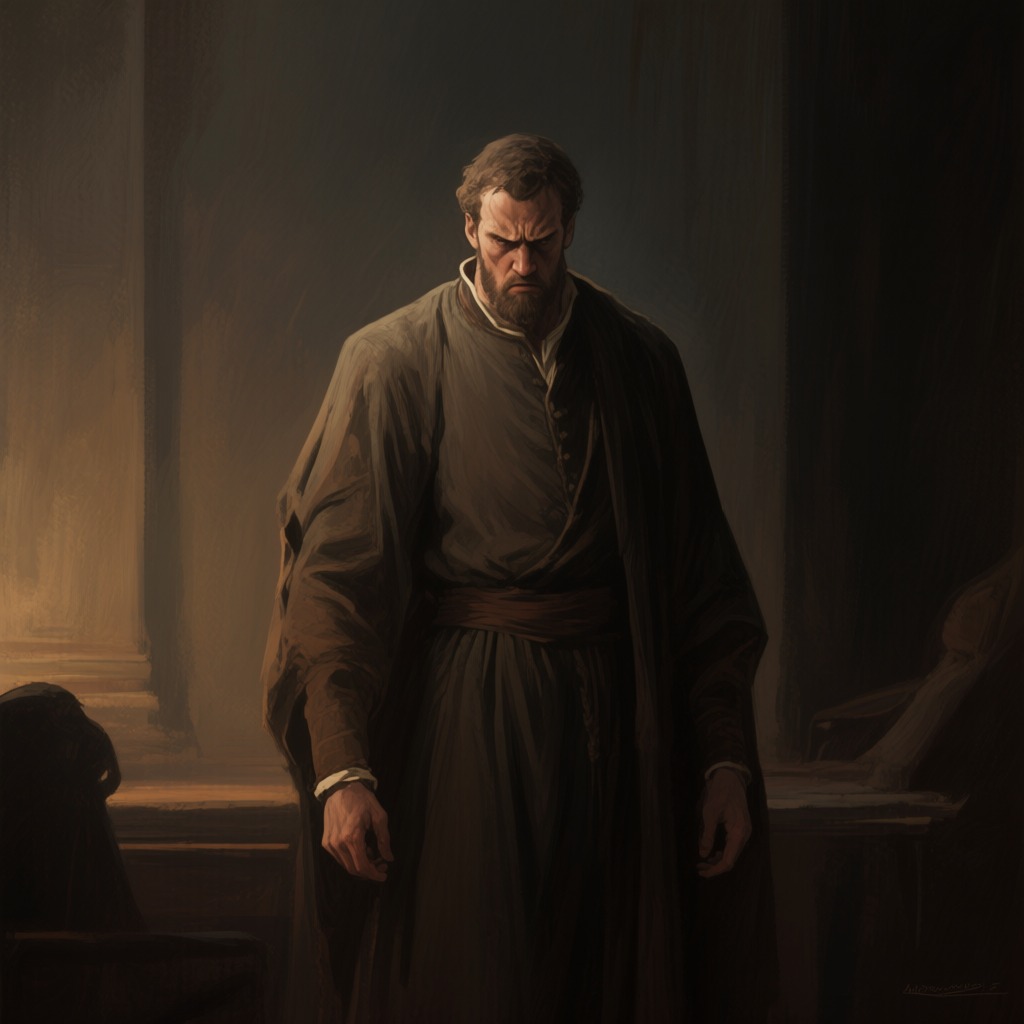
Didier is a burly, heavily jowled Frenchman who embodies the physical enforcer role within the local Resistance network in Carriveau. He first appears as Isabelle Rossignol's captor after she is caught chalking a V for victory on a Nazi propaganda poster, grabbing her wrist so hard she gasps and shoving her against the poster she had just defaced. Yet within moments, he reveals himself not as a collaborator but as a member of the underground, pulling her into a secret meeting room where Henri Navarre and other resisters are gathered. His initial rough handling is a test of her nerve, and when she passes it, he becomes a key figure in the dangerous work that follows.
Role in the Resistance
Didier is a man of action rather than strategy, trusted by Henri for his physical strength and his willingness to do what is necessary. He is present at the clandestine meetings in the abandoned novelty store, where the group plans the distribution of tracts supporting General de Gaulle and criticising the surrender. When Isabelle is recruited to distribute the papers, Didier is among those who watch her, judging her readiness. Later, when the network expands to include the Nightingale escape route, Didier is part of the team that handles the most dangerous tasks: disposing of bodies and cleaning up evidence. After Captain Beck is killed in Vianne's barn, it is Didier who declares that "disposing of the bodies is the easy part," and he takes charge of burying the German officer and the dead airman, and of dismantling Beck's motorcycle to prevent detection.
Key Actions and Relationships
Didier's most significant actions are those that protect the network from exposure. He is the one who first grabs Isabelle in the alley, but he is also the one who vouches for her when she proves her courage. He works alongside Henri and Gaëtan, and his physical presence is a deterrent to anyone who might threaten the group. His relationship with Isabelle is initially adversarial—he is the one who drags her through the streets—but it evolves into one of mutual respect as she proves her worth. He is not a leader like Henri, but he is an indispensable operative, the kind of man who can be counted on to do the heavy lifting, both literally and figuratively, in a war fought in shadows.
Narrative Significance
Didier represents the ordinary Frenchmen who were drawn into the Resistance not by ideology alone but by a visceral hatred of the occupier and a willingness to act. His physicality—the "puffed-up look of a circus strong man" and the "heavily jowled, oversized face"—marks him as a man of the people, not an intellectual or a leader. He is the muscle of the network, the one who can be trusted with the most compromising tasks. His presence in the story underscores the collective nature of the Resistance: it was not only the charismatic leaders or the daring couriers who made it work, but also the strong, silent men who buried the bodies and kept the secrets.